
 The Department of Plant Pathology at the University of Wisconsin – Madison was founded in 1910 to meet the needs of the growers and help combat crop failures.
This important relationship between faculty and growers’ needs has continued to be a major strength in our Department and in the College of Agricultural and Life Sciences.
Current members of the Department are dedicated to advancing knowledge of plant-microbe interactions while supporting food production and environmental security by addressing plant disease control, grower and consumer needs, and environmental sustainability.
Department personnel have long been recognized for their leadership roles in the biological sciences, and plant pathology in particular:
| 9 | Faculty members have served as president of the American Phytopathological Society. |
| 7 | Faculty members have been elected into the National Academy of Sciences. |
| 1 | Faculty member served as President of the International Society for Plant Pathology. |
| 1 | Faculty member served as President of the American Institute of Biological Sciences. |
The Department offers undergraduate, MS and Ph.D. degrees in Plant Pathology.
Articles About the Department
Research Differentiates New Species of Endangered Baobab Tree in Madagascar
August 17, 2026
While earning her PhD in Botany, Plant Path Teaching Faculty Nisa Karimi researched baobab trees in Madagascar. […]
UW Distinguished Research Fellows Program Is in Full Swing
August 7, 2026
The 11 postdoctoral trainees in the UW Distinguished Research Fellows Program (UW DRFP) are off to a strong start. […]
UW Organic Agriculture Field Days to Focus on Technology and Community
June 15, 2026
While rising prices can put a strain on both farmers and consumers, interest in organic products continues to remain high. In 2025, U.S. organic food sales grew three times as fast […]
CALS Awards: WALSAA, Maurer and Spitzer award recipients
5/29/2026
Continuing with our celebration of this year’s CALS Awards recipients, we are sharing information about the winners of the WALSAA Outstanding Advisor Award, the Arthur J. […]

Undergraduate Programs
Our programs combine relevant course work with hands-on experience for a one-of-a-kind educational experience that not only educates students, but trains future leaders.

Graduate Programs
The strength of our graduate programs is based on an internationally recognized faculty, real-world field opportunities, and on the excellence of supporting disciplines.
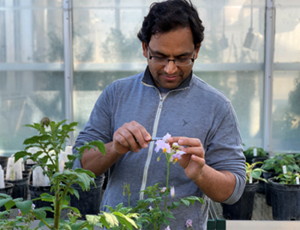
Research
We’re proud to be the home of exceptional faculty, staff, and graduate students who maintain excellence in plant pathology research.
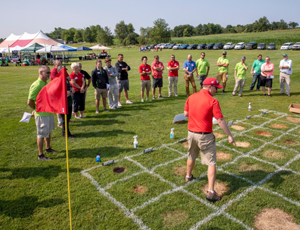
Extension/Outreach
Our Extension and Outreach faculty and staff members are an important link between the members of the public that use our research products and the communities of scientists who create new knowledge.
Values
Our department values diversity, inclusion, integrity, community, and respect as an integral part of the academic culture. See our Diversity resources on the menu above the photos.
Mission
Our mission is to be a world leader in research, teaching, and extension involving plant health, while serving the changing needs of society, the environment, and the University.
Diversity
Our department values diversity, inclusion, integrity, community, and respect as an integral part of the academic culture. See our Diversity resources.
Land Acknowledgement Statement
The University of Wisconsin-Madison occupies Ho-Chunk Land, a place their nation has called Teejop (Day-JOPE) since time immemorial. In an 1832 treaty, the Ho-Chunk were forced to cede this territory. Decades of ethnic cleansing followed when both the federal and state government repeatedly, but unsuccessfully, sought to forcibly remove the Ho-Chunk from Wisconsin.
This history of colonization informs our shared future of collaboration and innovation. Today, UW-Madison respects the inherent sovereignty of the Ho-Chunk Nation, along with the eleven other First Nations of Wisconsin.
Please take a moment to consider the many legacies of violence, displacement, migration and settlement that bring us together here today. And please join us in uncovering such truths every day. Learn more about the Department’s Mission and Values.
Photo Credits
Research block photo – Dennis Halterman, UW–Plant Pathology.
Extension/Outreach block photo – Michael P. King/UW–Madison CALS.